Thursday, 19 July 2018

Drinking with despair and Dickens -絶望とディケンズと共にお酒を飲むこと-


I recently read a brilliant short story by Charles Dickens.  It is dark but very funny.  I would like to share it, so I have shortened it and made the language simpler to help non-native speakers.  If you feel deep despair, Dickens recommends enjoying a long smoke and a moderate drink, and trying to laugh at the ridiculousness of life.

An edited extract from, “The Baron of Grogzwig,” by Charles Dickens:
Long ago, in a castle in Germany, there was a rich, happy baron.  He loved hunting boars and bears in the forests around his castle, and drinking with his friends.
But as he grew older he grew a little tired of hunting and drinking, and decided to get married.  After marriage, his wife soon had a child.  She had one more each year and in time the baron had 13 children.  He had no more time for hunting or drinking with his friends.  And having to pay to maintain so many children, he found that he was no longer rich.  He began to despair over his lost freedom, and his lack of money.
“I don’t see what is to be done,” said the baron.  “I think I’ll kill myself.”  This was a bright idea.
The baron took out an old hunting knife and, having sharpened it on his boot, he put it to his throat.  But he stopped his hand when he heard a sudden loud screaming coming from the upstairs nursery where his children were playing.
“If I had been a bachelor,” said the baron, sighing, “I might have done it fifty times over without being interrupted!”
The baron called his servant and asked him to put a flask of wine and a large pipe of tobacco in a quiet little room in the castle.  In half an hour the servant had done this.
The baron strode to the room.  The bottle and pipe were ready, in front of a warm fire.  On the whole, the place looked very comfortable.
The baron locked the door.  “I’ll smoke a last pipe,” he said, “And then I’ll be off.”
So, putting the knife on the table, and drinking a good measure of wine, the baron threw himself back in his chair, stretched his legs out before the fire, and puffed away.
He thought about a great many things – about his present troubles, and past days as a bachelor, and his friends who had long since disappeared.  His mind was running upon bears and boars when, while draining his glass, he raised his eyes and saw with astonishment that he was not alone.
On the opposite side of the fire there sat a hideous, wrinkled figure, with deeply sunken eyes and a face like death.  He wore the clothes that men wear to the grave.  He took no notice of the baron, but was intently eyeing the fire.
“Hello!” said the baron, stamping his foot to attract his attention.
“Hello,” replied the stranger, moving his eyes towards the baron, but not his face.  “What now?”
“What now?” replied the baron, not frightened by his strange, dull voice and eyes.  “I shall ask that question.  How did you get in here?”
“Through the door,” replied the figure.”
“What are you?” said the baron.
“A man,” replied the figure.
“I don’t believe it!” said the baron.
“Disbelieve it then,” said the figure.
“I will,” returned the baron.
The figure looked at the bold baron for some time, and then said, familiarly, “There’s no fooling you, I see.  I’m not a man.”
“What are you then?” asked the baron.
“A genius,” replied the figure.
“You don’t look much like one,” returned the baron, scornfully.
“I am the genius of despair and suicide,” said the creature.  “Now you know me!”  With these words the creature turned and faced the baron, as if preparing for a talk.  “Now,” said the figure, glancing at the hunting knife, “Are you ready for me?”
“Not quite,” returned the baron.  “I must finish this pipe first.”
“Hurry up then,” said the figure.
“You seem in a hurry!” said the baron.
“Why yes, I am,” answered the figure.  “There are many people waiting for me in England and France just now, and my time is a good deal taken up.”
“Do you drink?” said the baron, touching the wine bottle with his pipe.
“Nine times out of ten and then, very hard,” replied the figure.
“Never in moderation?” asked the baron.
“Never,” replied the figure with a shudder.  “That makes people cheerful.”  The figure looked at the baron.  “Be as quick as you can, will you?  There’s a man with too much money and free time who wants me now.”
“He’s going to kill himself because he has too much money?” exclaimed the baron, very amused.  “Ha ha!  That’s a good one!”  This was the first time the baron had laughed for a long time.
And the figure vanished.

Vocabulary:
moderate – a reasonable amount; not too much and not too little
a baron – a kind of noble; a Lord
a boar - a kind of wild pig
a bachelor – a single, unmarried man
to drain one’s glass – to drink all of the liquid in one’s glass
hideous – horrible; terrible-looking
to fool someone – to successfully lie to someone; to make someone believe something incorrect
to vanish – to disappear


Thursday, 12 July 2018

How you feel when it rains cheese sandwiches -雨のようにチーズサンドが天から降ったら、どう思うか-


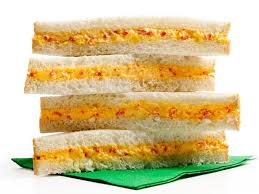
For several years I have mostly been eating cheese sandwiches for lunch.  I don’t have much time to prepare lunch between lessons and I can’t really be bothered cooking and cleaning dishes twice in one day.  So a cheese sandwich is a very easy way to fill my stomach.  I don’t add any butter, or vegetables.  It’s not a cheese and butter sandwich, or a cheese and pickle sandwich, or a cheese and tomato sandwich.  It’s a cheese sandwich.
But last week I found myself thinking about making lunch, and sighing.  “Oh God, not another cheese sandwich,” I thought.  I searched for some tuna fish, but couldn’t find any.  I looked in the fridge for some tofu, but there was a tofu-sized empty spot on the shelf.  I looked for some soup, but the cupboard was bare.
My 2,000th cheese sandwich stared at me, ugly and cold and unwelcoming, and I had no choice but to accept it.  I ate the cheese sandwich, and then a packet of natto to help me forget the taste.
My sudden realisation that I hated cheese sandwiches reminded me of a story from the Bible.  The Israelites had been slaves in Egypt.  But they listened to the advice of Moses and escaped into the desert.  When they arrived there was little to eat and the people complained to Moses, “When we were in Egypt we had fish and bread and vegetables to eat.  Why have you taken us here where there is nothing to eat?  Are we to starve here?”
God heard their complaints and caused cheese sandwiches to fall from Heaven.  They then ate the cheese sandwiches every day for forty years until they reached a new homeland.  I’ll bet that they felt the same way about cheese sandwiches that I do!
Well, no, not really.  It wasn’t cheese sandwiches in the Bible story.  It actually says that it rained manna from Heaven.  Manna was a kind of wafer made with honey.
I have been making more of an effort to vary my lunch diet recently.  When I have time, I make the evening’s dinner salad at lunchtime, and eat some of it with my lunch.  I always have kimchi in the fridge to eat as a side dish.  And I found out where my wife had hidden the tuna fish.  The cheese sandwich rainy season is over.

Vocabulary:
can’t be bothered (doing something) – feel that it is not worth the effort or are too lazy to do something
to sigh - to let out a long deep breath, expressing an emotion such as disappointment
bare – empty; having no objects on it
to vary one’s diet – to eat different kinds of food, not just the same thing or few things

Thursday, 5 July 2018

Does Amazon know me better than my mother does? – Being scared by book recommendations -アマゾンは母よりも僕を知っているか?おすすめの本でおびえること-


My mother often complains that I never seem to read the books she recommends.  “Have you read that suspense novel I sent you which is set in Japan?”
“No Mum, not yet.  I’ve been, uh... busy.”
“Busy doing what?”
”Reading other books.”
Maybe she doesn’t quite understand the kind of books I like.  Maybe it’s not that.  Maybe I prefer to stumble across great books rather than be pushed towards them.  That way, reading them feels like an unexpected luxury, not a chore.
In any case, satisfying someone with a book recommendation is difficult.  My mother has seen what I have been reading since I was reading Spot the Dog – “See Spot.  Spot runs.  See Spot run.”  If even she has difficulty knowing what I would like to read, then how can Amazon do it?
I wrote a little last week about Audible, an Amazon company, and their book recommendations to me.  It made me think about how they collect data on their users in order to recommend books to them.
For instance, just before my son was born, Audible sent me recommendations for books about parenting – Tips for a new father, How to raise children, etc.  How did they know that I might be interested in such books?  I had never read any books about parenting before, I hadn’t added any to my Audible wish-list, and I hadn’t searched their database for books about parenting.  They must have gotten the data from a purchase I made on Amazon.  My wife ordered some baby nappies or other baby-related items from my Amazon account.  And suddenly Audible, a separate company owned by Amazon, knows that I might be interested in books about parenting.  Isn’t that a little bit scary?
I found three different lists of recommended books that Audible has suggested to me.  They were:
Recommendations, based on your previous purchases;
Recommendations for you inspired by your wish-list;
And Recommendations inspired by your searches.

Be careful what you buy, and even what you search for on Amazon.  They’re watching carefully!
And don’t think that it is just a computer which is making a profile of you.  The computers are operated by humans.  And if you annoy those humans enough, they can use that collected data against you.
In December 2017 it was revealed that a British man had gotten very strange book recommendations from Amazon.  He had complained to Amazon’s help desk about a package delivery.  Then on the same day he got five emails from Amazon with recommendations for books about death and suicide.  Their titles included, “Death,” “Follow you home,” and “Suicide’s an option.”  Amazon later confirmed that an employee had misused the customer’s data and had sent the emails.  They offered the customer a 50 pound gift token as compensation.
Audible’s book recommendations for me were not very helpful.  They included a lot of books I have already read, but didn’t buy on Amazon.  They also recommended Harry Potter.  I’ve no idea why.  Maybe they know that I haven’t bought it, and think that anyone who hasn’t read that book is a fool.  Or maybe when you put all of the collected data on me into a computer programme, it adds up to Harry Potter.
I think I’ll read that suspense novel set in Japan instead.  Thanks, Mum.

Vocabulary:
to stumble across – to find by chance
a chore – a bothersome task; something you have to do
a purchase – the act of buying something
a nappy – something worn by babies because they cannot yet use a toilet
to be inspired by something – to get creative ideas from something
to annoy someone – to make someone slightly angry
to use something against someone – to use something as a tool to harm someone
to misuse – to use something incorrectly or improperly


Thursday, 28 June 2018

Feeling checked out at the check-out -レジでチェックされている感じ-


“Oh!  Do you like kimchi?”
The lady at the check-out of my local supermarket suddenly strikes up a conversation as she is processing my items.
“Um... yes.  I sometimes make steamed pork and kimchi on a bed of rice.  Or I just put it into a salad...”  I wonder if I am supposed to say more.  Should I ask her if she likes kimchi too?
“Wow, so you like kimchi then!”
“Hmmm...”  Whether I ought to say something more or not, no other kimchi related comments spring to mind.
I awkwardly pay, pick up my packet of kimchi and other items, and wander away.
I don’t think of myself as an unfriendly person.  But random conversations in shops or at the supermarket usually leave me feeling a little awkward.  I can’t think of anything especially interesting to say.  And I’m not sure how long I should let the conversation continue.  What if there is somebody in the queue behind me, who just wants me to shut up about kimchi and let them move forward?
But the next week the lady at the check-out does it again.
“Oh!  So you like rice-crackers as well!”
“Ah, yes.  Crunch-crunch.  Ha ha!”
I leave the supermarket feeling more awkward than ever.  The worst thing is that I now have to be very careful about what I buy, in case the same lady passes further comment on my items.
“Oh!  Two bottles of cheap wine, a jumbo box of chocolates, and some ready-meals for one!  Are you going through a rocky patch in your marriage?” she might say.
Maybe I’m taking the wrong attitude to this.  Having somebody check out and comment on my purchases encourages me to make better choices.  I’ve noticed that I download a lot of classic audio books from Audible.  I’ve listened to Dante, Herodotus and Oscar Wilde.  It may be because they send me a list of recommendations based on my previous purchases.  I wouldn’t want the list only to show sci-fi novels.  A feeling of being watched encourages me to try more challenging books.  Perhaps it will also encourage me to eat fewer unhealthy rice-crackers and more healthy kimchi.
Thank you, lady at the check-out.  Have a nice day.

Vocabulary:
to spring to mind – of a thought, idea etc., to suddenly occur
to wander (away) – to walk (away) leisurely, or without a clear purpose
crunch – the noise of something hard, such as a biscuit, breaking
a ready-meal – a supermarket meal which doesn’t require cooking
to go through a rocky patch (in a relationship) – to go through a difficult time or experience a period of difficulties (in a relationship)

Thursday, 21 June 2018

Sir Kazuo Ishiguro of the floating world -浮世の作家、Sir カズオ・イシグロ-


“Deeply touched to receive this honour from the nation that welcomed me as a small foreign boy.”
Kazuo Ishiguro, on receiving his knighthood

“Knighthood lies above eternity; It doesn’t live off fame, but rather deeds.”
Dejan Stojanovic

My wife recently read Kazuo Ishiguro’s book, “An artist of the floating world”.  Several of my students have also started reading his books.  They are, of course, jumping on the bandwagon.  Before Ishiguro won the Nobel Prize, they weren’t reading his books.  Now they are suddenly his biggest fans!
In addition to winning the Nobel Prize, Ishiguro has gotten a British knighthood.  He has become Sir Kazuo Ishiguro.
Should Ishiguro have been awarded a British knighthood? - By the way, he won’t mind me not calling him “Sir”, since I’ve been reading his books long before he got his knighthood or Nobel Prize (unlike some people I could mention).
There are some good reasons to give Ishiguro a knighthood.  His books are very well written.  Literature is important, and rewarding top writers acknowledges that.  Ishiguro’s personal story is also heartwarming.  He came to Britain as a “small foreign boy”, and yet has risen high in British society.  Recognising this shows that Britain is open and welcoming (at least occasionally).
But I would like someone who receives a knighthood to have done something selfless or beyond what was expected of them as citizens.  Ishiguro is not being honoured for charity work.  He is not being honoured for placing himself in danger to help others.  He is being honoured for “services to literature”.  But he did get paid for writing his books, didn’t he?  And I could make the same argument about many of the other people honoured.  Actress Emma Thompson is now Dame Emma Thompson for “services to drama”.  But she does get paid for acting, I suppose?
So here’s my plan.  Sir Kazuo can keep his knighthood.  But his next two books are to be published for free.  Anyone can reach the floating world of the British knighthood.  But they should give up something a little extra to get there.

Vocabulary:
to be touched – to be emotionally moved
a deed – an action
to jump on the bandwagon – to start following or supporting someone or something because everyone else is; to support someone after they have become very successful
to acknowledge something – to accept or recognise the truth of something
selfless – unselfish; concerned more with the wishes or needs of others than oneself


Thursday, 14 June 2018

Keeping your children on the other side of the business class curtain -子供たちをビジネスクラスのカーテンの向こう側に座らせること-


I have never flown business class.  I wouldn’t mind paying 10 per cent extra for a little more space, and a curtain to keep out the poor people.  But business class tickets are usually three times the price of economy class tickets.  I’d rather spend extra money when I get to where I am going than on the plane journey.
But some people are rich enough not to mind the expense.  If you are a tv celebrity, for example, you can probably afford business class.  And you have extra reason to enjoy the curtain that keeps out poor people.  You don’t want to be bothered by autograph hunters.
But what does a tv celebrity do when travelling with their children?  The kids can’t drink the free Champagne.  They are unlikely to fully appreciate the in-flight dining options, such as tarragon and orange cured salmon with vegetable caviar.
British tv presenter Kirstie Allsopp recently talked about her answer to this.  She and her partner sit in the business class cabin, and her 10 and 12 year old sons sit in economy class.  Explaining her reasons, she said that having the kids sit in business class would be a massive waste of money.  She also said “[Business class] should be a huge treat that you’ve worked for.  If kids get used to [business class] then what do they have to work towards?”
Some people complained about this.  They pointed out that if the kids misbehaved or needed help, then it would annoy other passengers and give extra work to the flight attendants.
But I wonder whether there is a bigger problem?  If you keep the kids on the other side of the curtain while you sip on Champagne and nibble on caviar, couldn’t that cause resentment in the kids, which will come out in the future?  What if the kids get their revenge when you are old and sick?  “Sorry, Mummy.  Being loved by your children is something you have to work towards.  We wouldn’t want to spoil you with visits to the nursing home.”
I’m just jealous.  I’ve always wanted to peek behind that curtain.

Vocabulary:
the expense – the cost
a celebrity – a famous person, especially in entertainment or sport
an autograph hunter – someone who tries to collect the signatures of famous people
a treat – a special luxury or reward
to nibble on something – to eat something in small bites
resentment – a bitter feeling of having been treated unfairly
to spoil someone – usually of a child, to treat someone overly leniently or softly so that their character is badly affected

Thursday, 7 June 2018

How children became naughty -子供たちはどのように、いたずらっ子になったか-

It happened like this.

First Woman and First Man lived happily in God’s Garden of Peace until, one day, they got drunk on apple cider and caused a mess.  God was really angry and handed out punishments to the two of them.

“First Woman: It was you who sneaked in the apple cider, and you got drunk and threw up all over the garden path.  The poor angels have been cleaning up all morning.  As a punishment, you will have to leave the Garden of Peace.  And you will have to experience the pain of childbirth.”
“And you, First Man: You peed in the goldfish pond and fell asleep in the flower bed, crushing my favourite tulips.  As a punishment, you will have to leave the Garden of Peace.  You will also have to work hard for your food from now on - No more free lunches!”
“Okay,” said God.  “I have been harsh but fair with you.  You can take your apple cider with you when you leave.”
First Man and First Woman looked into God’s stern face, trying to look contrite.  Just then, sitting on a tree and visible over God’s shoulder, they noticed a snake.  The snake started making funny faces and swaying about comically.  They tried not to laugh, but couldn’t help sniggering.
“What’s so funny?” asked God, coldly.  “Let’s see if you find this funny.  I’m not finished punishing you.  When you have children, they will be naughty.  They will laugh at you and refuse to accept their punishment.  When you go to a restaurant, they will never find anything on the menu they want to eat.  When you find a game that they like, they will demand that you play it 100 times in a row, and still get angry when you get tired.  They will be unable to sit still or behave in a car, even if you are driving them to Disneyland.  And you will never return to the Garden of Peace!”
*
Well, it may not be peaceful but at least they make us laugh. 


Vocabulary:
cider – an alcoholic drink, made with fruit
to sneak something in – to bring something inside by stealth, hiding it from someone else
to pee – to urinate
to crush something – to press or squeeze something until it is destroyed
contrite – to be full of regret, acknowledging something one has done wrong
to snigger – to laugh when you are trying not to laugh; to laugh in a half-suppressed way