Wednesday, 8 May 2019

A Chickpea and Sunflower Bagel for Her, and a Save the World Sandwich for Him -彼女にひよこ豆とひまわりのベーグルを、彼には世界を救うサンドを- 


A vegan cafe in Australia caused controversy a couple of years ago by deciding to ask men and women to pay different prices for the same food.  If men or women have to pay more for the same dish, which gender do you think should be charged more?
Of course women should be charged more.  This is because women’s bodies are, on average, smaller than men’s.  So if a man and his girlfriend both order a sandwich, the woman may be 90 per cent full after eating it, and the man only 72 per cent full.  It makes sense to me therefor that the man’s sandwich should cost him 18 per cent less.  It is 18 per cent less satisfying for him.
But this is not how the owners of Handsome Her cafe in Melbourne saw it.  Statistics in Australia show that men earn 18 per cent more than women on average.  So the cafe owners asked men to pay 18 per cent extra for the same food, to highlight the gender pay gap.  They also gave women “priority seating”.  I’ve no idea how the priority seating worked.  Did the cafe ask men to move to the back of the bus, I mean cafe, if a woman came in and wanted to sit on the comfiest seat?
Anyway, the cafe went out of business at the end of April this year.  The cafe’s unusual policies were discussed and criticised on the internet.  Many people found their “man-tax” idea ridiculous.
I don’t know whether the man-tax was the reason the cafe went out of business, but it suggests to me that the owners were making a mistake by mixing up food and politics.  I am interested in politics and agree that it is important to protest and argue for positive change.  But some places are better for political protests than others.  When I go out for lunch, I don’t crave a socialist sandwich, or a workers’ rights sandwich, or a save the world sandwich.  I just want a tasty sandwich.  Maybe the cafe went out of business because they were spending too much time planning a revolution to overthrow men, and not enough time cooking tasty sandwiches.


Vocabulary:

gender – relating to a difference between male and female

s
tatistics – a set of numbers collected to show differences between groups, changes over time, etc.
to highlight something – to draw attention to something
priority seating – seats reserved for people with special needs, such as the disabled, parents with young children, etc.
the comfiest – the most comfortable
ridiculous – absurd; deserving to be laughed at
to crave something – to strongly desire something

Wednesday, 1 May 2019

Starting Afresh -最初からやり直すこと-

Today is the first day of the Reiwa Era in Japan.  I used to dislike the Japanese custom of giving a period of time a unique era name, and changing the name whenever the emperor changes.  I disliked it because it caused problems for me in places such as banks and hospitals.  Whenever I had to write down my birth date, I couldn’t remember which era I had been born in.  The staff also had difficulty working it out from the Western style date I gave them.

But I have started to like the custom a little more.  There’s something positive about changing name.  It’s a little like saying, “Let’s put all our troubles and difficulties in the past and start afresh.”
After the French Revolution, the new government tried to sweep away loyalties to the kings and religious figures of the past by making a new calendar and starting from Year 1.  The calendar remained in use for about 12 years until Napoleon switched back to the old one.
Like a French Revolutionary, why not ignore the rest of the world and live in your own era?  Buy a calendar and cross out 2019 and replace it with your own inspiring name – Year of Diligent Study, or Year of Eating Well, or Year of Definitely Getting a Girlfriend.  Then every day you will be reminded to act positively towards your goal, not be stuck in the failed ideas of the past.
Happy new era.  It’s not every day that we get the chance to start afresh from Year 1.

Vocabulary:
to sweep something away – to quickly and completely get rid of something old
diligent – showing care in your work or duties

Wednesday, 24 April 2019

Confessions of a sardine in love -恋に落ちたイワシの告白-


My love always wears white gloves when her hands caress me.  Her body is hidden behind a smart uniform, but I can feel her brawny arms, her muscles impressive.
Does she know that I love her?  Every morning I keep my face carefully neutral as I turn to face her, masking my excitement.  Regretfully I have to waste a moment as I glance down to check my footing.  Then I gaze into her face as she pushes me away from her.
It’s 7.55am on the Tozai Line on the Tokyo Metro.  Part-time “oshiya”, or people pushers, are employed between 7.30am and 8.30am to deal with the rush hour commuters.  So many more people board the trains than their designed capacity that the last passengers have to enter the crush of bodies on the train backwards, and be pushed inside to allow the doors to close.  For three years now Car no.3 has been handled by my love – a woman in her late thirties with freckles around the eyes, a look of pinched concentration as she works, and arms that are as strong as a mother’s love.
It takes a little guile to always find myself last to board.  Sometimes I have to let trains pass.  I leave the queue, fiddling with my bag or patting my pocket.  Then I let the queue build up again before joining at the back.  Once or twice I couldn’t avoid being swept along by the crowd and had to enter the train.  I couldn’t bear the thought of going to the office without her send off.  So I got off at the next station and went back, and made sure she pushed me properly the second time.  She must have noticed.  Doesn’t she realise how much I love her?
Why do I love her caress?  It’s like an “unbirth” – a birth in reverse.  I stand freely on the platform, before turning around and being pushed into an enclosing womb.  She is mother, doctor and lover, all in one.  I dream that one day she will acknowledge my love.  She will look into my eyes and her pinched face will break into a smile, her freckles dancing at the edge of her eyes.  And instead of pushing me away with her pure white gloves, she will pull me towards her, into her loving embrace.
*
This is not an autobiographical story.  I am not in love with a people pusher on Japan’s subway network!  But I was inspired to imagine the story above when I heard that the friend of one of my students works part-time as a female oshiya.  Is there really never any romance to be found in the pushing of sardines into a tin can on wheels?

Vocabulary:
to caress – to touch or stroke gently or lovingly
brawny – physically strong; muscular
to mask an emotion – to hide an emotion
capacity – the maximum amount that something can, or is supposed to, contain
a crush – a mass of things or people forced closely together
a freckle – a little brown spot on the skin
guile – sly or cunning intelligence
to fiddle with something – to move or handle something in a nervous way
a womb – the part of a woman’s body where a baby grows
autobiographical – of a piece of writing, about the writer or based on his or her life


Wednesday, 17 April 2019

One more cup of coffee before I go down below -下に行く前に、コーヒーをもう一杯-


When the nuclear bombs fall like raindrops; or when the comet strikes and giant waves are thrown up all around the world; or when the Martian invaders shoot fire from their tripods – you will probably die.  99.99 per cent of people will probably die as human civilization falls.  That’s because you, and they, are unprepared.
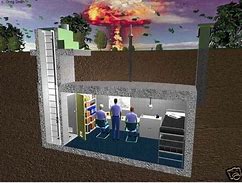
Not me.  I have bought a house in the Swiss Alps, away from the lowlands which would be flooded by inrushing seas after a comet strike, and far from the deserts the Martians would try to conquer.  I have also built a shelter underground which is strong enough to survive a nuclear war.  So as you and the rest of the world perish in the disaster, I will be sitting comfortably in my little underground room, sipping a cup of coffee.  That’s because I am prepared.
*
“Apartment block owners are required to construct and fit out shelters in all new dwellings.”
Article 46 of the Swiss law on civil protection

I read an interesting article this week about Switzerland and how they prepare for disasters.  Switzerland is the only country in the world which has built enough underground shelters to house all of its citizens underground for a short time in the event of a cloud of nuclear radiation passing over the country.  All new apartment blocks which are built have to be built with an underground shelter, or else the builder has to pay a huge penalty.
But the article was actually about coffee.  There’s no point in everyone in the country running underground without supplies.  So the government stockpiles various foods and items considered necessary for survival.  One of the items stockpiled is coffee.  The Swiss government always keeps enough coffee to supply the nation for three months in the event of a sudden disaster.  The government is now considering taking coffee off the list of items which are stockpiled, and a final decision will be taken in November.
Isn’t it amazing the lengths which Switzerland has gone to prepare for disasters?  Giving every citizen a space in an underground shelter is amazing, stockpiling enough food to survive for three months underground is fantastic!  But do they really need coffee?  What else have they stockpiled?  Do they have paper napkins in case the nuclear explosions cause someone to spill his drink?  Do they have cuckoo clocks in each shelter in case survivors of a comet strike want to count the hours cheerfully until the flood waters recede?  Do they have little cocktail umbrellas in case the survivors of the Martian invasion want to invite the enemy to a party and make friends?
*
I have nearly finished preparing my shelter for the end of the world.  I have stockpiled pizza bases, tomato sauce, anchovies, garlic, an espresso machine and several pairs of comfy slippers.  Have I forgotten anything?

Vocabulary:
a comet – a large ball of ice and dust which moves through space
Martian – from or of the planet Mars, the fourth planet
a tripod – a three legged stand for supporting something such as a camera – in the book, “War of the Worlds”, the Martians attacked human cities from huge tripods
to be flooded – for land or buildings to be covered in large amounts of water
to perish – to die
to fit something out – to equip or supply something
a dwelling – a place where people live
supplies – items prepared for later use
to stockpile something – to collect and store extra supplies or stock
to recede – to go back


Wednesday, 10 April 2019

Tips on nibbling cheese with a little bull in a china shop -小さな雄牛を連れて陶磁器店でチーズを楽しむためのヒント-

We opened our front door and stepped inside.  I quickly ran to my computer and turned it on, hoping that while I had been away my favourite football team had been winning.  My two year-old son ran inside and scattered all his toys on the floor and started asking his dolls to wake up.  My wife stepped in and sighed, looking forward to returning to work and having a little time off from tantrums and child psychology.  We had only been away for two nights in Hakone, but it was good to be home.

The best thing about our trip to Hakone was that there was a very nice restaurant in the hotel, which served a set course meal for breakfast and dinner.  The hardest thing about our trip to Hakone (apart from needing to take a long bus ride to get anywhere) was the fact that there was a very nice restaurant in the hotel which served a set course meal for breakfast and dinner.  We knew we would enjoy the fine dining, wine and cheese, if only we could get our son to sit quietly for long enough in the restaurant.

Keeping a two year old quiet in a fancy restaurant is like taking a small bull into a china shop while you admire the shop’s goods.  It’s all dainty and nice, but it could go horribly wrong at any moment.  Here are some tips for eating with a small child in a fancy restaurant which we picked up on our trip:

1 – Sit in the corner
We went for four meals in the same restaurant.  We, and they, very quickly realised that the best table for us was the one farthest away from everyone else.

2 – Eat and drink quickly
We had a lovely meal on the first night and almost made it to the end without my son breaking down into screams and forcing us to leave.  But he did start screaming before my wife had time to drink her after-dinner coffee.
“That’s why I ordered an espresso,” I told her as I gulped it down just in time.

3 – Order the things you really want to eat first
My wife and I both enjoy wine and cheese.  We were really looking forward to trying some different strong cheeses after our course meal.  But we had to leave before we had time to try any the first night.  So on the second night we ordered the cheese at the start of the meal, and nibbled at it in between courses.
If the thing you really want to eat is the tiramisu or the ice-cream, then just ask the waiter to bring it first.  They will be happy so long as they can get you out of the restaurant more quickly.

4 – Teach your child to say “Cheers!”
It makes you look like a family of alcoholics, but hey! – If you are a family of alcoholics then why worry about it?
Sometimes the action of clinking glasses together (gently!) can be a good distraction for the child, and delay the point when they get bored and frustrated.

5 – If it is at all possible, get a doggy bag
We tried to have the plate of cheese sent to our room as room service, but the hotel wouldn’t allow it.  We did, though, manage to bring the unfinished bottle of wine to our room when we left.  Leaving a cup of coffee unfinished is frustrating enough, but there was no way I was leaving half of an expensive bottle of wine.
Check with the restaurant in advance and see if they will allow you to take any unfinished courses away with you.  When you are looking after a little bull, he might see red and force you to abandon part of your meal.  So be prepared.

Vocabulary:
to scatter something – to throw something in various random directions
a tantrum – a childish fit of anger
china – a kind of fine, white ceramic
dainty – pretty and delicate
to break down – of a person, to lose emotional control; to collapse
to gulp something down – to drink something very quickly
Cheers! – something said to a companion when drinking (usually alcohol) together
to clink glasses – to touch glasses together as a form of salutation when drinking with someone
a doggy bag – when eating at a restaurant, a bag to put the leftovers of the meal in
to see red – to get suddenly angry or out of control

Wednesday, 3 April 2019

Recovering from Procrastination -ぐずぐずする癖から立ち直ること-


A journey of a thousand miles begins with a single step.  For a procrastinator, an essay of a thousand words begins with a cup of tea, a biscuit, a quick check of the news headlines, and then another biscuit.
I have often been in a situation where I have to write something by a deadline.  I studied history at university and had to submit regular essays to finish the course.  I have been writing this weekly blog for more than five years.  I have plenty of ideas and generally enjoy the process of writing once I get started.  But it can be very difficult to get started.  Somehow the thought of starting is fearful, and I put it off and I put it off until I have to start or I won’t get it finished in time.  For every university essay I ended up sitting up all night and handing the essay in at the last minute.  My blog articles are shorter and so I never have to sit up all night, but I often don’t start until late in the evening on the last day I have to finish them.
My name is William and I am a recovering procrastinator.
I read an interesting article recently about why people procrastinate, and suggestions for possible solutions.  The article suggested that we evolved in small communities of 150 to 200 individuals and our problems were not as complex or abstract as they are now.  Immediate, simple problems like, “There’s a bloody tiger – run away!” were much more important to our survival and success than complex or abstract ones.  So putting off those problems to deal with immediate ones made a lot of sense.  Now that we live in communities of not hundreds but millions, our problems are more complex and abstract.  “A lot of people I have never met might like my novel and pay me some money to read it, if only I can get it finished,” for example.  Our brains naturally assign this problem a low priority.
So how can we learn to start a piece of work long before the deadline, finish it quickly, and then enjoy our remaining free time?
The essay I read suggested using an “unschedule”.  Let us compare an unschedule to a schedule.  In a schedule you write down all the tasks you want to get finished – “Write my novel for four hours in the morning,” or, “Research my university essay for six hours in the library.”  When you write down these huge commitments of your time, it immediately seems frightening and difficult to achieve, like writing, “Climb Mount Everest in the morning.”  No wonder we feel daunted about starting and go for a cup of tea and a biscuit instead.
In an unschedule, you instead write down all the fun things you have planned for the day, such as, “Drink a cup of tea in the morning and eat some biscuits,” or, “Go to the pub for three hours.”  Then you write your essays or your novel in the blank spaces in your schedule between your fun plans.  The idea is that you no longer feel scared about getting started, and work hard to finish quickly so that you can be ready to go out and meet your friends in the pub.
I haven’t tried to use an unschedule yet.  I try to control my procrastination using the power of habit.  The difficult thing is not writing, but making the choice to start writing.  So I try to take away any thoughts of choice by making writing a habit.  I always do it at the same time on the same days.  So I don’t have to choose to do it.  It is totally natural, like always eating breakfast at the same time or leaving for work to catch a particular train in the morning.
This essay was finished on time.  Recovering procrastinators have to celebrate our small victories over our condition.


Vocabulary:
a deadline – the latest time or date by which something should be completed
to submit something – to hand something in, such as a piece of work
to put something off – to delay doing something
complex – not simple; having many parts or aspects
abstract – existing in thought or as an idea but not having a physical existence
a priority – a level of importance
to be daunted – to feel frightened by the prospect of doing something


Wednesday, 27 March 2019

The power of a rigged choice -仕組まれた二者択一の力-


Before you read this blog post, I have to ask you to do a little work.  It is necessary for you in order to understand the rest.  You have to choose either to blink (shut your eyes and open them again) twice, or to stand up and count out loud to ten before sitting down again.  Choose one and do it now please.
Okay.  So did you pick one and do it?  You may be cheating and have done neither.  Since this is a blog for non-native speakers of English, you may not have understood, and be scratching your head in confusion instead.  But my guess is that most people chose to blink twice.
The reason that you probably blinked twice is that it seems a lot easier and less effort than standing up and counting to ten.  I’m sure that you didn’t particularly want to do it, but the choice seemed very easy in comparison with the alternative.  That at least is my theory.  I have found that it is a great technique for getting people to do things that they don’t want to do.  If you simply try to force them to do something then they will naturally resist.  But if you can set up a situation in which they have to choose between what you want, and something worse, then they will likely do what you want without complaint.
I thought about this technique recently when I was trying to get my son to go to his cot at night.  He is two and a half now, and often resists being put in his cot.  I let him lie in my futon beside me for half an hour or so before I lift him out and put him in his cot to sleep alone.  Understandably enough, he prefers to stay in the futon, where he can kick me and roll over on top of me, and get up and run around whenever he wants.
So for a while I had a battle getting him to move from the futon to the cot after half an hour.  I would just tell him it was time to move and lift him into the cot.  He would scream and shout, demanding to stay where he was.  In the end he often cried himself to sleep, frustrated that he had been abandoned in the cot.
So I tried saying to him one night, “You have to leave the futon now, but you can choose where to sleep.  Would you like to sleep in the cot, or in the laundry room?”
Of course I wouldn’t really make him sleep in the laundry room, but he didn’t know that.  So he thought about it and said, “Cot.”  I lifted him into the cot and he went to sleep peacefully, happy that he had made a good choice.
Don’t think that the rigged choice is a technique that is only ever used on children.  In British politics now, it seems to be the only technique Prime Minister Theresa May knows.  She has negotiated a very unpopular deal with the EU, which Parliament does not want to vote for.  The most recent opinion polls show that 80 per cent of people think the government has done a bad job of negotiating, and that 55 per cent of Britons would now vote to stay in the EU.  Almost six million people have signed a petition asking the government to cancel Brexit.  An estimated 1 million people marched in London recently to demand another chance to vote to stay in the EU.  But the only choice the Prime Minister is offering is to agree to her bad deal or to face a huge economic crisis by leaving the EU without a deal.  Mrs. May wouldn’t really leave the whole country to sleep in the laundry room, would she?

Vocabulary:
to scratch one’s head in confusion – not to know what is going on to such an extent that you place your hand on your head and scratch like your head is itchy
to resist – to oppose; to refuse to accept and work against
a cot – a small, raised sleeping place for a baby or small child that is hard to climb out of
frustrated – feeling unable to change things or get what one wants
to be abandoned – to be left alone without help
an opinion poll – a survey of people’s attitudes
a petition – an official letter to the government, asking them to change something